
Hospitality AI
How to Train an AI to Sound Like Your Brand (Without Losing the Soul of Your Service)

The phrase "AI brand voice" makes most hospitality operators wince. We are sympathetic. The first generation of voice bots were so bad, so flat, so transactional, so cheerful in exactly the wrong moments, that the entire category got tarred for a decade. Telling a director of hospitality that her property's phone line will be answered by an AI is, fairly often, the start of an awkward conversation.
We have had that awkward conversation maybe four hundred times. The honest answer to her concerns is that voice training is real work, not a checkbox, and that the gap between a generic AI voice and a brand-trained AI voice is enormous. Here is how we actually do it.
Layer one: the voice itself
The most basic layer is the voice: the cadence, the warmth, the speed, the pitch range, the breath patterns. Modern voice models can be tuned across all of these dimensions. The trick is that you cannot describe the right voice in words, you have to listen to it.
Our intake process starts with us listening to recordings of your existing front-of-house team. Specifically, we want to hear three things: a morning check-in, a reservation call, and a service-recovery call. The way your best associate handles the reservation call is the voice we are training to. Her cadence, her warmth, the way she pauses before saying the guest's name: those are the textures we are trying to capture.
Layer two: language patterns
Once the voice is right, the next layer is language patterns. This is where we encode the actual phrases that make your property sound like your property. Greetings, hold language, transfer language, the way you describe your spa menu, the phrase your front desk uses when a guest asks about parking, the specific way your dining team handles a reservation modification.
Most properties have these patterns implicitly: they are how the team has been trained over years. We sit with the GM or the director of hospitality and pull them out into an explicit document. By the end of the process, the property usually has a brand voice document they did not have before, and which they find useful for human training too.
Layer three: content knowledge
The third layer is the actual knowledge base: the menu, the wine list, the spa treatments, the house policies, the specific therapists and their specialties, the hours of operation by season, the parking situation, the dress code, the kids' policy. This is the layer most people assume is the whole thing, when it is actually the easiest layer. Information is teachable in days, voice is teachable in weeks.
What we throw away
There are some things AI voice will never sound right doing, and we have learned to throw them out rather than fake them. The classic example is the "I'm so sorry to hear that" empathic moment in a service recovery call. AI can produce the words, but the texture is off. The right move is to escalate the call to a human within the first 30 seconds, with full context, so the human can deliver the empathy that matters. We train LOULOU to recognize the cue and hand off, not to fake the moment.
This is the part of the process that earns the trust of skeptical operators faster than anything else. The willingness to say "AI is the wrong tool here" is what makes the operator believe AI is the right tool for the rest.
How long this actually takes
Voice training takes 2-3 weeks. The information layer takes another week. The parallel testing period is another 2 weeks. Most properties go from contract to live in roughly 6 weeks. The first month after going live is a tuning period where we listen to calls daily and adjust.
The properties that get the best results are the ones whose GMs treat the brand voice work as a real project, not a procurement decision. The ones who hand us a brochure and walk away get a competent generic voice. The ones who sit with us for a few hours and walk us through the texture of how their best associate handles a difficult call get something that sounds like their property.
This is the difference between a voice bot and a voice concierge. It is mostly the work the operator is willing to put in. We do the technical lift, the texture comes from the property.
Continue Reading
A New Chapter for LOULOU AI: Building Tech That Elevates Human Connection
LOULOU AI is proud to announce its first institutional funding, a startup grant from the South Carolina Research Authority. This milestone accelerates our mission to build technology that supports hospitality teams, elevates the guest experience, and captures opportunities without compromising human connection. In this article, we'll explore the significance of this funding and how it reflects our commitment to innovation in hospitality technology.
April 14, 2026 · 3 min
Hospitality AI
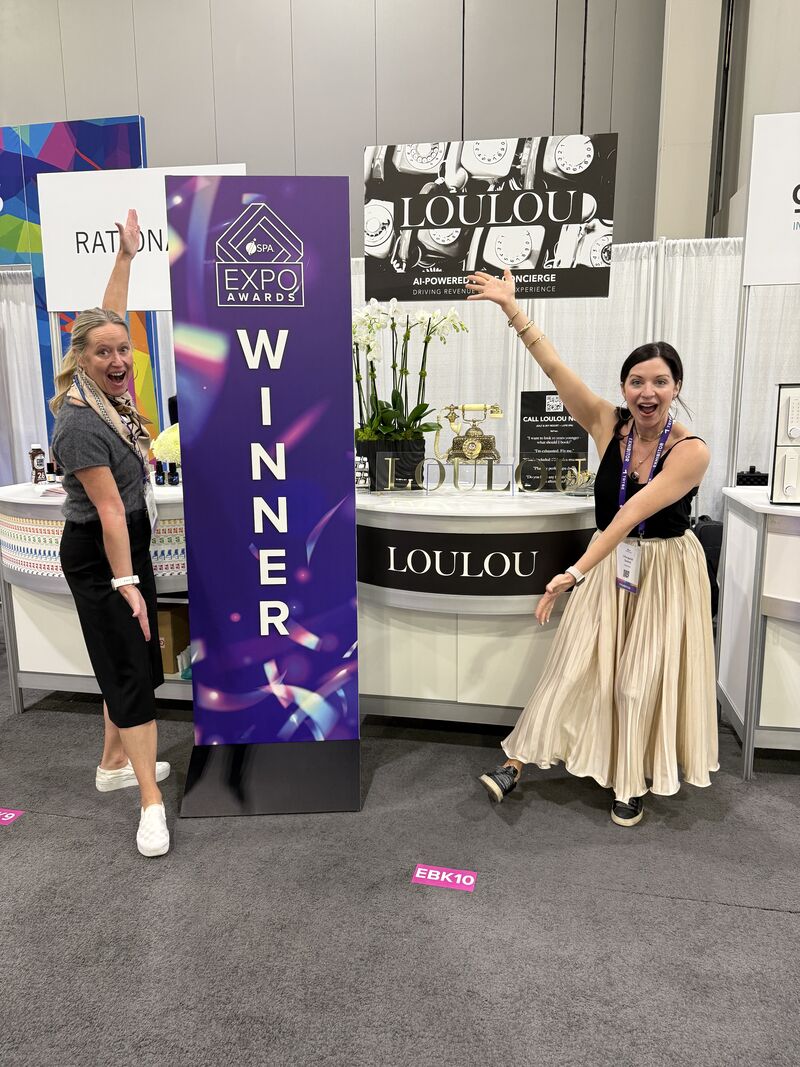
LOULOU Named Best New Product at ISPA 2026, What It Means for Hospitality AI
We went into ISPA with no expectations. We left with the Best New Product/Service award, and with something more important: confirmation that the problem we built for is exactly the problem operators are living every day.
April 13, 2026 · 6 min
The Math of Hospitality: Why Working Smarter Matters
The hospitality industry faces immense pressure due to labor shortages and rising costs. To stay afloat, it's crucial to work smarter and protect both guest experience and revenue. Learn how to overcome these challenges with the right strategies and technologies.
April 11, 2026 · 3 min