
Restaurants
The Restaurant Reservation Funnel: Where Guests Drop Off and How to Catch Them
When operators talk about the restaurant reservation funnel, they usually mean the booking engine on the website: sessions to bookings, conversion percentage, abandonment by step. This is fine, but it is missing the bigger funnel, the one that includes phone calls, modifications, no-shows, and walk-ins. The phone funnel is where most of the leakage actually happens.
We have mapped this funnel across our restaurant clients in detail. The pattern is remarkably consistent across markets, cuisines, and price points. Here is what it looks like.
Stage 1: Inbound intent
Every reservation funnel starts with someone deciding to call. For a busy restaurant in a dense urban market, daily inbound call volume is usually 60-150 calls. Half are new reservations, a third are modifications, cancellations, or status checks. The remainder are FAQ-level questions (parking, dress code, dietary, private events).
Stage 2: The unanswered call (15-25% drop-off)
This is the largest single leak in the funnel. During the dinner rush, roughly 5:30 to 8:30, the host stand is overwhelmed: calls go unanswered, voicemails are left rarely, and the caller moves on. Industry data and our own measurements both put the unanswered-call rate at 15-25% for busy restaurants. At 20%, on a 100-call day, that is 20 lost reservation attempts a day, 600 a month, 7,200 a year.
If half of those unanswered calls were new reservations, and the average covers per booking is 3 with a $90 check average, the annual lost revenue is roughly $970,000. Most operators have never seen this number because the bookings that did not happen never created a transaction.
Stage 3: The modification request (8-12% drop-off)
The next leak is the modification call: a guest with an existing reservation calls to change the time or the party size, cannot get through, and either cancels online or just no-shows. Modifications that hit voicemail become no-shows at startling rates, we have measured roughly 30% of voicemail-modification calls become no-shows on the night.
Stage 4: The cancellation that should have been a re-fill
When a cancellation does come through, most restaurants do not have the staff bandwidth to immediately re-fill the slot from the waitlist. The cancellation just becomes an empty table. A high-velocity restaurant with strong waitlist demand could re-fill 60-80% of cancellations if there were a system to do it within minutes. Most have nothing.
Stage 5: The no-show (10-18% drop-off)
Industry no-show rates run 10-18% for restaurants without aggressive deposit and confirmation programs. Most no-shows are not malicious, they are people who forgot, had a schedule change, or could not get through to cancel. Better confirmation flows reduce no-shows materially, and better cancellation handling converts the would-be no-shows into re-bookable inventory.
Where the fixes are
The standard advice for fixing the restaurant funnel is to push everything to the booking engine: add Resy, optimize the OpenTable widget, use SevenRooms to track guest preferences. All of this is sensible, but it does not touch the phone funnel, and the phone funnel is where the biggest leaks are.
The fix that closes the most leakage is putting an AI voice host on the line. Specifically:
- Stage 2 (unanswered calls): closed almost entirely, every call is answered within 2 rings.
- Stage 3 (modifications): closed almost entirely, modifications happen in real time and update the booking platform.
- Stage 4 (cancellation re-fill): automated, cancellations trigger SMS to the waitlist within seconds.
- Stage 5 (no-shows): reduced, automated confirmation calls and SMS reminders drop no-show rates by 30-50%.
The economic shape of the fix
For a restaurant doing $5M in annual revenue, closing the phone funnel typically recovers $400,000 to $700,000 of revenue in the first year. The cost of AI voice answering is a small fraction of that, well under $20,000 a year for most properties. The math is honestly unfair.
The hard part is not the math, the hard part is convincing operators that the phone funnel exists and that it is leaking the way it is. Most owners assume the booking engine is the whole story, it is, in our experience, less than half of it.
Continue Reading
A New Chapter for LOULOU AI: Building Tech That Elevates Human Connection
LOULOU AI is proud to announce its first institutional funding, a startup grant from the South Carolina Research Authority. This milestone accelerates our mission to build technology that supports hospitality teams, elevates the guest experience, and captures opportunities without compromising human connection. In this article, we'll explore the significance of this funding and how it reflects our commitment to innovation in hospitality technology.
April 14, 2026 · 3 min
Hospitality AI
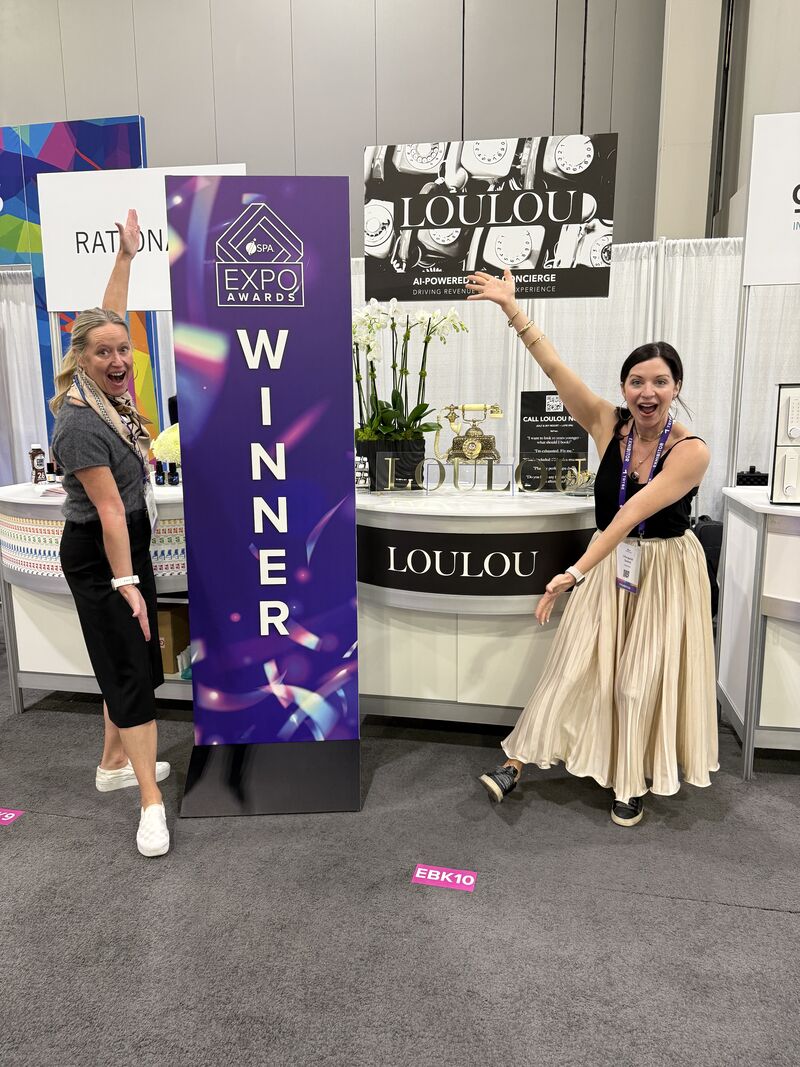
LOULOU Named Best New Product at ISPA 2026, What It Means for Hospitality AI
We went into ISPA with no expectations. We left with the Best New Product/Service award, and with something more important: confirmation that the problem we built for is exactly the problem operators are living every day.
April 13, 2026 · 6 min
The Math of Hospitality: Why Working Smarter Matters
The hospitality industry faces immense pressure due to labor shortages and rising costs. To stay afloat, it's crucial to work smarter and protect both guest experience and revenue. Learn how to overcome these challenges with the right strategies and technologies.
April 11, 2026 · 3 min