
Hotels & Resorts
Multilingual Hotel Front Desk: Serving International Guests Without Hiring International Staff
Here is a small thought experiment I ask operators to try. Pick up your hotel's main line and imagine, for just one call, that you only speak Portuguese. The greeting comes in English. You navigate the IVR by guessing at the word "reservations." A front desk agent picks up, warm and competent in English, and you understand almost none of it. You hang up. You did not become a booking. You became an abandoned call statistic that nobody measured, because the system has no way to know you were ever there.
International leisure travel to the US has recovered to near-2019 levels. Brazilian families, Japanese honeymooners, Spanish-speaking travelers across the Sun Belt, Mandarin-speaking visitors in New York. The demand is there. The phone infrastructure at most US properties is not. International callers abandon English-only phone systems at roughly three times the rate of English-speaking callers, and in international-heavy markets, that abandonment represents a material share of total potential revenue.
Why the multilingual hotel front desk gap is so hard to close with staffing
The thoughtful response is to hire bilingual front desk staff. Every property should have at least one Spanish-speaking team member, and most do. But the math gets impossible fast once you think beyond Spanish: Mandarin, Japanese, Korean, Portuguese, French, German, Italian, Arabic, Russian, and the regional variants within each of those that actually matter to guests. Brazilian Portuguese is meaningfully different from Continental Portuguese. Mexican Spanish differs from Castilian in ways guests absolutely notice.
- Spanish and Portuguese: largest international leisure call volume in Florida, Texas, and NYC
- Mandarin and Cantonese: significant share in New York, San Francisco, and Hawaii
- Japanese: concentrated in Honolulu, NYC, and LA markets
- French: strong in New Orleans, Miami, and luxury Northeast properties
- Arabic: growing in luxury urban and resort markets
- Language detection time with modern AI: under 600 milliseconds, before the caller finishes the greeting
Even if you could hire fluent staff for the five highest-volume languages at your property, you still face a second problem: those staff members are not all on shift at 11 p.m. on a Tuesday when the call from Tokyo comes in. Multilingual staffing is a daytime solution for a 24-hour problem.
What modern voice AI does differently, and why it matters for guests
I want to be specific here, because there is a meaningful difference between what the previous generation of IVR-style language menus did and what a well-trained AI voice concierge does today. "Para español, marque dos" is not multilingual service. It is a stalling tactic that tells the guest her language is a secondary consideration.
The current generation detects language within the first 600 milliseconds of the call and responds in the caller's language with regionally appropriate phrasing, not a translated English script with the warmth stripped out. It handles code-switching mid-call gracefully. It carries brand voice in every language, not just English. These distinctions matter to guests because they are the difference between feeling genuinely welcomed and feeling tolerated.
Multilingual is not a translation feature. It is a hospitality commitment.
What we see at international-heavy properties, real results
At our Miami partner properties, multilingual call handling has been the single largest revenue lever in the first 60 days. Recovered calls in Spanish and Brazilian Portuguese accounted for the majority of measurable booking lift. At our Honolulu partners, Japanese-language handling drove the biggest single-language recovery. In New York, the mix was broader: Spanish, Mandarin, Russian, and Portuguese all contributed meaningfully.
The pattern is consistent across markets: in any property with meaningful international leisure flow, multilingual AI voice answering costs less than a single bilingual hire and covers more languages than you could ever staff for. It is a structural revenue protection, and it runs at 3 a.m. on a Tuesday as reliably as it does at noon on a Saturday. What does your phone experience look like to a guest calling from São Paulo right now?
Continue Reading
A New Chapter for LOULOU AI: Building Tech That Elevates Human Connection
LOULOU AI is proud to announce its first institutional funding, a startup grant from the South Carolina Research Authority. This milestone accelerates our mission to build technology that supports hospitality teams, elevates the guest experience, and captures opportunities without compromising human connection. In this article, we'll explore the significance of this funding and how it reflects our commitment to innovation in hospitality technology.
April 14, 2026 · 3 min
Hospitality AI
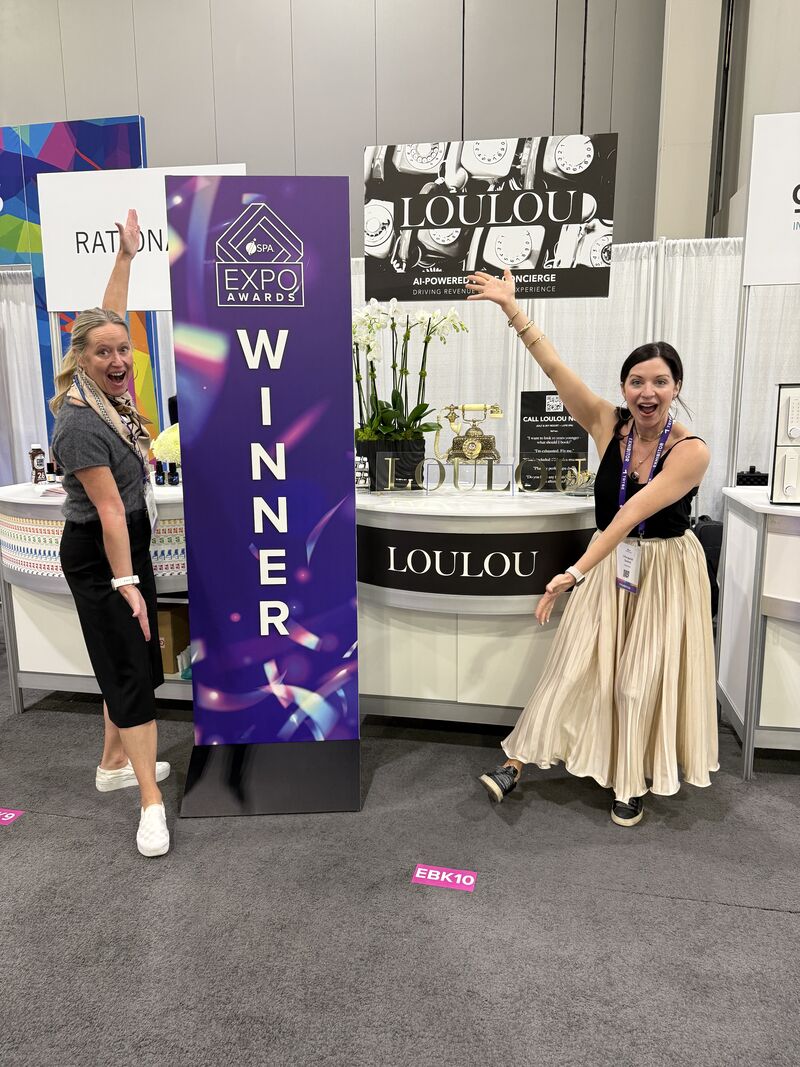
LOULOU Named Best New Product at ISPA 2026, What It Means for Hospitality AI
We went into ISPA with no expectations. We left with the Best New Product/Service award, and with something more important: confirmation that the problem we built for is exactly the problem operators are living every day.
April 13, 2026 · 6 min
The Math of Hospitality: Why Working Smarter Matters
The hospitality industry faces immense pressure due to labor shortages and rising costs. To stay afloat, it's crucial to work smarter and protect both guest experience and revenue. Learn how to overcome these challenges with the right strategies and technologies.
April 11, 2026 · 3 min