
Hotels & Resorts
What Forbes-Level Service Actually Means on the Phone, and How AI Delivers It Consistently
My co-founder Dawn Spann spent nearly a decade running Forbes Five-Star spa programs before we built LOULOU together. She has sat through more phone-courtesy mock inspections than most people know exist. So when we started designing LOULOU's phone behavior, I brought her into every single conversation, because the bar for what sounds right on a luxury phone line is not something you can learn from a rubric alone. You have to have felt the difference between a call that lands and a call that costs you a star.
Here is what I have come to understand: most Forbes-rated properties get the in-person experience right. The team is talented, the training is thorough, the culture is there. Where properties slip is on the phone, and specifically, on the phone after hours, during compression, when the front desk is one tired night auditor and a lobby full of arrivals away from a service failure. The Forbes standard does not flex for the day you are having.
What Forbes service standards actually measure on a phone call
The broad shape of what gets evaluated on a Forbes phone inspection breaks into seven categories, each teachable to a great team member, and each breakable by fatigue, distraction, or a coordinator who is pulling double duty:
- Answer time: within three rings, every call, every hour
- Greeting structure: property name, agent name, offer of assistance, in that order
- Name use: guest addressed by name within the first 90 seconds, and at appropriate moments after
- Tone, warmth, pacing: measurable even when the rubric uses softer language
- Hold and transfer protocol: always ask permission, always explain, always thank on return, always within 30 seconds
- Information ownership: the agent answers, she does not redirect the caller to another department for things she should know
- Personalized close: the call ends with the guest's name and a specific reference to the conversation
The standards do not flex for a busy Thursday night or a team two people short. That is the entire point. Forbes-level service is not the property that gets it right on its best day. It is the property that gets it right on its worst day too.
Why AI is structurally well-suited to Forbes phone criteria
When I look at those seven criteria, I see something interesting: they are essentially a precision checklist. And checklists, executed with consistency, warmth, and no fatigue penalty, are what thoughtfully built technology does well. Not because AI is smarter than a great reservations associate. It isn't. But because it does not have a third shift, a head cold, or a guest screaming at it from the lobby.
When we configured LOULOU for our first Forbes-tier resort partners, we built each criterion into the system explicitly. Greeting structure: locked. Name use: triggered the moment the guest is identified, by phone number on file or by stating her name. Hold protocol: permission always requested, explanation always given, return always under 30 seconds. Personalized close: tied to the actual content of the call. The result, across a six-month sample of thousands of calls, was near-perfect phone-courtesy scores on our internal Forbes mock audits.
The gap between four-star and five-star properties is not the spa. It is the phone at 11 p.m. on a Tuesday.
Where AI still needs the human, an honest admission
I want to be straightforward about this: there are calls where AI should route immediately to a human. Service recovery with an upset guest. A group inquiry that needs creative deal-making. The VIP returning guest whose preferences are layered and nuanced enough to need genuine improvisation. We built LOULOU to recognize those calls and transfer them in seconds, with full context passed to the human, because the goal was never to remove the human. It was to protect the human's capacity for the moments that genuinely need her.
The consistency question every operator should ask
Here is the real test for your property: does your phone at 11 p.m. on a Tuesday sound the same as your phone at 11 a.m. on a Saturday? If the honest answer is no, or even "probably not", you have a consistency gap that no amount of training will close without the right infrastructure behind it. The talent is there. The gap is in the systems that protect that talent at every hour, for every guest, regardless of what else is happening on the floor. Is your Forbes-level service running on-brand at 3 a.m.?
Continue Reading
A New Chapter for LOULOU AI: Building Tech That Elevates Human Connection
LOULOU AI is proud to announce its first institutional funding, a startup grant from the South Carolina Research Authority. This milestone accelerates our mission to build technology that supports hospitality teams, elevates the guest experience, and captures opportunities without compromising human connection. In this article, we'll explore the significance of this funding and how it reflects our commitment to innovation in hospitality technology.
April 14, 2026 · 3 min
Hospitality AI
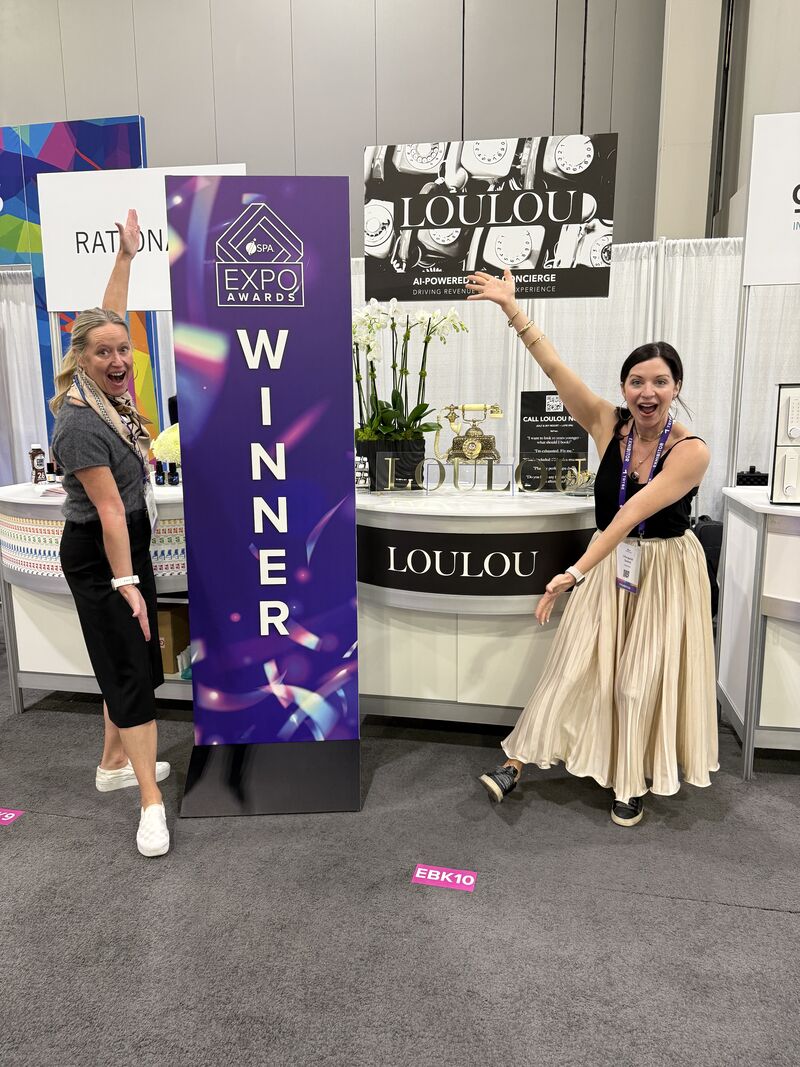
LOULOU Named Best New Product at ISPA 2026, What It Means for Hospitality AI
We went into ISPA with no expectations. We left with the Best New Product/Service award, and with something more important: confirmation that the problem we built for is exactly the problem operators are living every day.
April 13, 2026 · 6 min
The Math of Hospitality: Why Working Smarter Matters
The hospitality industry faces immense pressure due to labor shortages and rising costs. To stay afloat, it's crucial to work smarter and protect both guest experience and revenue. Learn how to overcome these challenges with the right strategies and technologies.
April 11, 2026 · 3 min