
Hotels & Resorts
The 85% Problem: Why Unanswered Resort Calls Are Your Biggest Hidden Revenue Leak

It was a Thursday afternoon at a boutique resort I was visiting, the kind of property where you can feel the intentionality in every detail, the flowers on the desk, the handwritten welcome card. The front desk associate was mid-check-in with a family: bags on the cart, kids asking about the pool, mom pulling out a credit card. Then the phone rang. She held up one finger to the family, turned, and answered it. The dad's expression shifted, just for a second, barely perceptible, but I caught it. That flicker of being paused is the moment the 85% problem lives in. And the story ends differently for the caller who does not get answered at all.
Eighty-five percent of callers whose calls go unanswered will not call back. Industry data has anchored on this figure for years, and every hospitality operator I have worked with has underestimated what it means for their property specifically. They think of it as a customer service problem. It is actually a revenue architecture problem, and the gap it creates is invisible on the books because the bookings that evaporated never left a record.
How unanswered calls drain hotel revenue, the real math
Most operators have an intuitive sense that missed calls are costly. Almost none have run the actual math for their property. Let me do it for a 200-room resort with modest inbound volume, 180 calls a day across reservations, spa, dining, and activities. An industry-average miss rate of 12% is conservative for a property that size. Here is what that looks like over a year:
- Daily missed calls at 12%: roughly 22 calls per day
- Daily lost callers (85% who do not call back): approximately 19
- Voice booking conversion rate at a typical resort: ~35%
- Daily lost bookings: about 6.6 bookings never made
- Average resort booking value, room plus ancillary blended: $750
- Daily lost revenue: ~$5,000, invisible, no transaction to flag
- Annual lost direct revenue: ~$1.8M at that miss rate
Discount those numbers conservatively, lower volume, lower miss rate, smaller market, and you still arrive at $900,000 or more. OTA-commission-free direct revenue, gone. The troubling part is not the size of the number. It is the invisibility. There is no cart abandonment report for a phone call. There is no failed transaction alert. The caller simply stops existing in your data the moment she hangs up.
The phone is the most under-instrumented revenue surface in the building, and the most expensive one to ignore.
Why traditional staffing cannot solve the unanswered-call problem
The instinct is to add headcount, another reservations agent, a dedicated phone line, someone from night audit. I have watched dozens of operators try this, and the math almost never works. There are three structural reasons, not operational ones.
First, calls arrive in bursts. Sunday afternoon when families are planning next weekend. Tuesday morning when a corporate event planner is finalizing a group. The night a storm cancels every flight on the East Coast. Staffing for the average means failing at the peak. Staffing for the peak means carrying dead capacity for 20 hours of every day.
Second, the labor market for hospitality front-of-house has been genuinely thin since 2021. Independent and boutique properties feel this more acutely than the brands. An open requisition on an org chart is not answering phones right now.
Third, and this is the friction point that most operators do not name out loud, your best phone person is also your best lobby person. Warm, patient, fluent in your property's story and offerings. Pulling her off the floor to cover overflow calls is not a neutral trade. It costs you on both ends.
What intentional voice infrastructure actually looks like
I am not describing the old IVR menus that trained two decades of guests to press zero and wait. The current generation of voice AI built for hospitality sounds like a well-trained reservations associate, latency under 600 milliseconds, graceful interruption handling, instant language switching, direct write into your PMS.
When we built LOULOU, my co-founder Dawn Spann brought nearly a decade of Forbes Five-Star spa and resort operations into the design. The standard we hold ourselves to is the same standard your guests hold you to: warmth and knowledge at every hour, not just during business hours. LOULOU can greet a returning guest by name, hold a suite while she asks about the kids' club, and switch to Portuguese mid-call without breaking the feeling of the conversation. That is on-brand, human-centered coverage, not a phone menu.
The one thing to do this week before anything else
Pull your call logs from the last two weeks. Look at total inbound volume, answer rate, abandonment rate, and average hold time. Then ask your team what they think the miss rate is, I promise you the actual number will be higher. This is not an indictment of anyone. The gap is structural, not personal. But it is invisible until you look at it, and it does not get smaller while you are not looking.
Once you have the baseline, you can make an intentional decision. Maybe it is a staffing adjustment. Maybe it is a technology layer. Maybe it is both. But you cannot protect what you cannot see. The 85% problem is real, it is solvable, and it is sitting in your call logs right now. What will you find when you open them?
Continue Reading
A New Chapter for LOULOU AI: Building Tech That Elevates Human Connection
LOULOU AI is proud to announce its first institutional funding, a startup grant from the South Carolina Research Authority. This milestone accelerates our mission to build technology that supports hospitality teams, elevates the guest experience, and captures opportunities without compromising human connection. In this article, we'll explore the significance of this funding and how it reflects our commitment to innovation in hospitality technology.
April 14, 2026 · 3 min
Hospitality AI
LOULOU Named Best New Product at ISPA 2026, What It Means for Hospitality AI
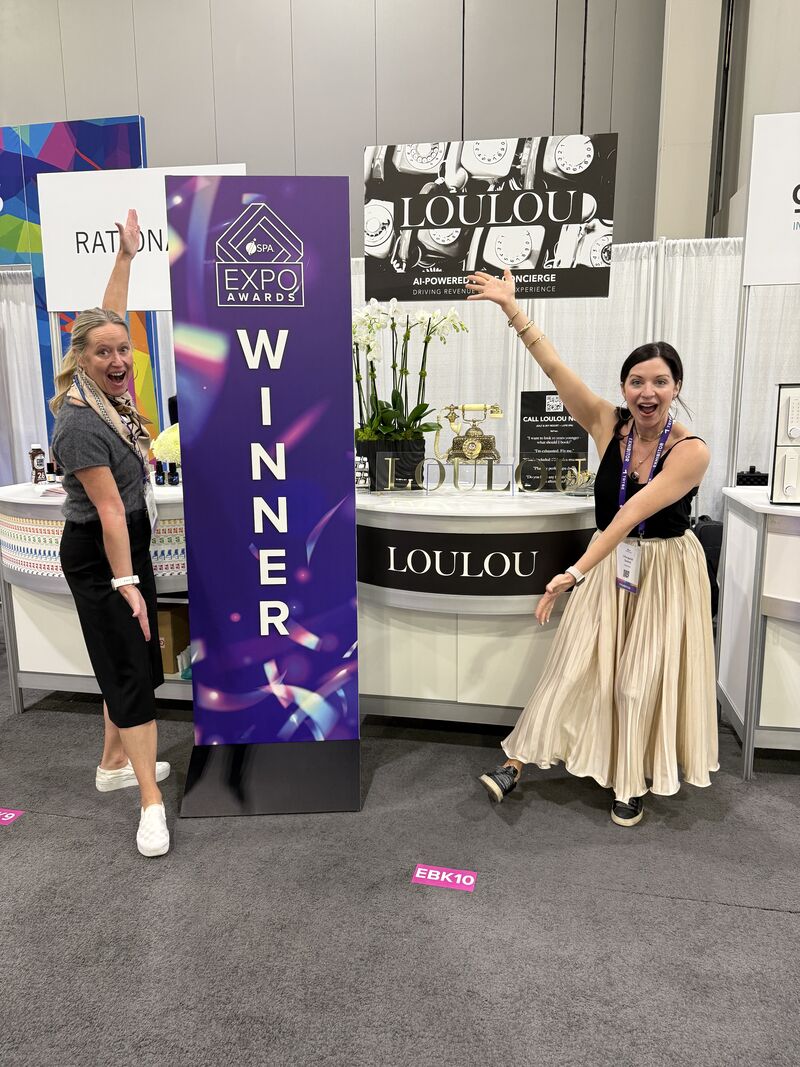
We went into ISPA with no expectations. We left with the Best New Product/Service award, and with something more important: confirmation that the problem we built for is exactly the problem operators are living every day.
April 13, 2026 · 6 min
The Math of Hospitality: Why Working Smarter Matters
The hospitality industry faces immense pressure due to labor shortages and rising costs. To stay afloat, it's crucial to work smarter and protect both guest experience and revenue. Learn how to overcome these challenges with the right strategies and technologies.
April 11, 2026 · 3 min